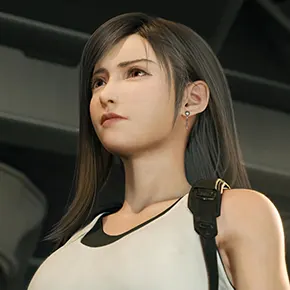
Ayumi Itō

Ayumi Itō and the Weight of a Single Role
Not every actor builds a voice career across dozens of franchises. For Ayumi Itō, one character did what most seiyuu spend a lifetime chasing – Tifa Lockhart made her name synonymous with a figure millions of players grew up with, and that connection has held for two decades. What makes this remarkable is the starting point: Itō came to voice acting not from the traditional drama school-to-agency pipeline, but from a live-action career that had already earned her national recognition before she ever stepped into a recording booth for Square Enix.
From Nerima to the Japanese Academy
The career started early. Itō made her screen debut at thirteen in Nobuhiko Obayashi’s The Water Travelers: Samurai Kids, a film that positioned her in a lineage of young Japanese performers introduced through distinctive auteur projects. That apprenticeship paid off quickly. At sixteen, director Shunji Iwai cast her as Ageha in Swallowtail Butterfly, a film that became one of the defining cult works of 1990s Japanese cinema. The role brought Itō two prizes at the 20th Japanese Academy Awards – Best New Actress and Best Supporting Actress – while she was still in high school. A parallel music chapter opened around the same time, when she joined the all-female rock project Mean Machine alongside Chara and YUKI, taking the lead vocalist role.
The Final Fantasy VII Franchise and Tifa Lockhart
The voice work arrived in 2005, when Square Enix cast Itō as Tifa Lockhart for Final Fantasy VII: Advent Children. The animated film was a direct sequel to one of the most culturally embedded video games ever made, and the pressure of giving Tifa her first speaking voice in a major production was real. Itō delivered a performance grounded in restraint – Tifa’s role in Advent Children is as much emotional anchor as fighter, and Itō leaned into the quieter register the character required. The credit opened a chain of appearances across the Compilation: Last Order: Final Fantasy VII (2005), Dirge of Cerberus: Final Fantasy VII (2006), Kingdom Hearts II (2005), and Dissidia 012 Final Fantasy (2011).
The most significant phase came when Square Enix began the Remake trilogy. Final Fantasy VII Remake (2020) gave Tifa her most fully realised characterisation yet, with hours of dialogue and a dramatic range the compilation films had never required. Itō returned for Final Fantasy VII Remake: Intergrade (2021) and Final Fantasy VII Rebirth (2024), maintaining continuity across a production cycle that stretched across nearly two decades since her first recording session for the character.
Screen Work Running in Parallel
The voice credits never displaced the screen career. Through the 2000s and 2010s, Itō maintained a consistent presence in Japanese film and television, appearing in GANTZ and GANTZ: Perfect Answer (2011), the drama Penance (2012), Solanin (2010), and Sekigahara (2017). The international profile expanded further when she joined HBO’s Tokyo Vice as a recurring cast member across both seasons. Her agency affiliation moved to Twin Planet in 2024, marking thirty years since her debut.
Ayumi Itō Voices
Video Games
Final Fantasy VII Revelation (2027)